


2026.07.5
Not All Kobe Beef Is the Same
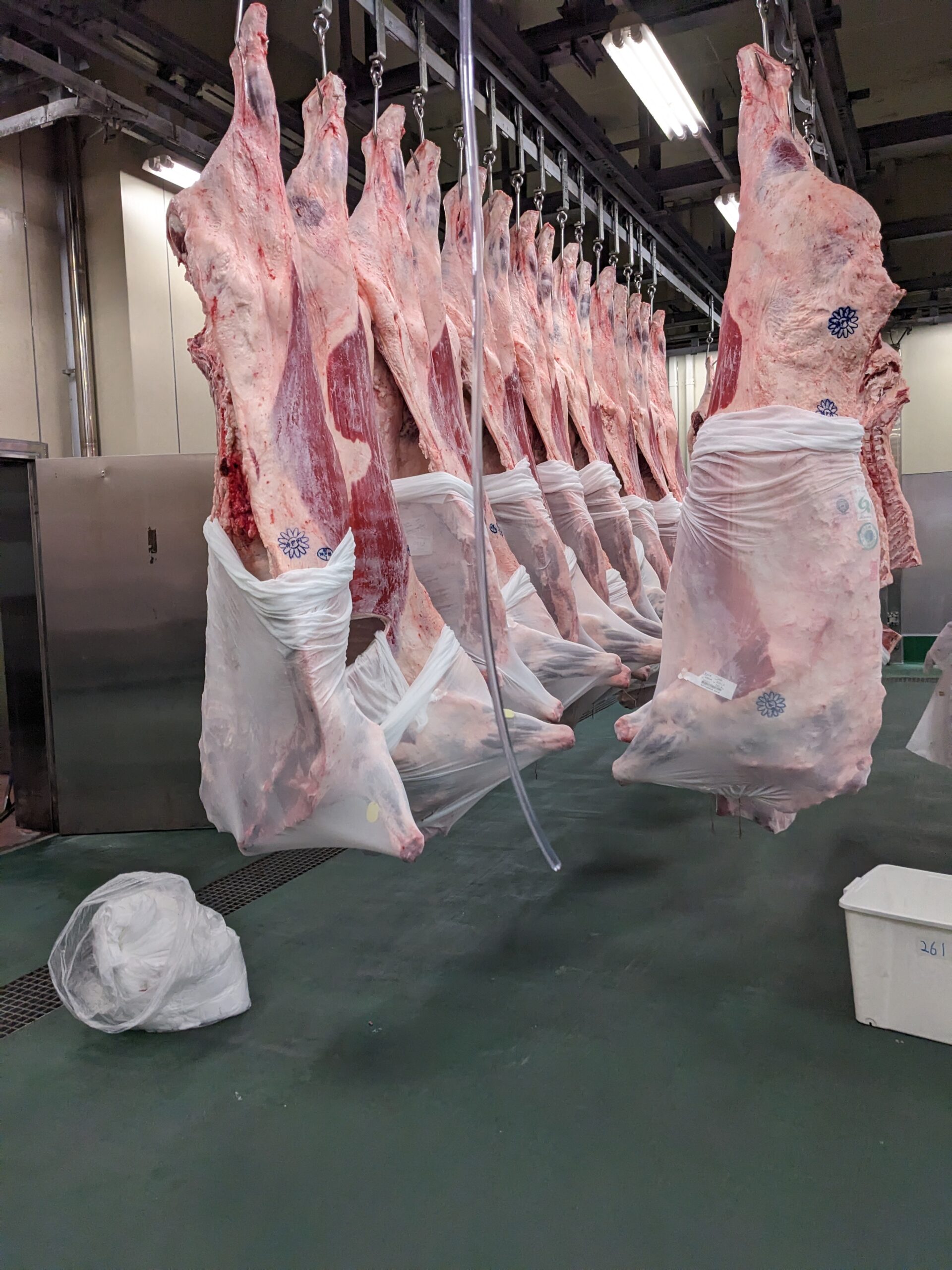 This is a longer post than usual, but I hope you’ll take a few minutes to read it when you have time.
I’d like to share something that is fundamental to how I choose and serve Kobe Beef.
Many people think that all Kobe Beef is the same, but in reality, the differences are enormous.
At the wholesale level, one carcass may sell for the equivalent of around ¥3,000 per kilogram, while another may exceed ¥9,000 per kilogram. (These prices refer to the whole carcass, including bone and fat.)
The final auction price is influenced by many factors: awards, breeder, bloodline, region of origin, age, and whether the animal is female or steer. However, what has the greatest impact is the quality of the carcass itself. When several buyers recognize an exceptional animal, competition naturally drives the price higher.
Award-winning cattle are certainly attractive from a marketing perspective, but an award does not always mean it will be the most delicious beef.
Every Monday, around fifty Kobe Beef carcasses are offered at the Kobe Central Wholesale Market. In my experience, perhaps one out of those fifty truly stands apart.
The standards for Tajima cattle—the bloodline from which Kobe Beef is produced—are among the strictest in Japan. Kobe Beef represents only the very best that meets those demanding standards.
For most people, simply eating authentic Kobe Beef is already a memorable experience. There is nothing wrong with that.
However, only a small number of restaurants continue searching for those truly exceptional animals that stand out even among Kobe Beef.
That is one reason why the price of a steak dinner can vary so dramatically from one restaurant to another.
There is another important factor as well.
Every cut of beef has its own character. The sirloin, ribeye, and tenderloin are generally considered the most valuable, while cuts such as rump, top round, chuck, and brisket each offer different flavors, textures, and require different preparation techniques.
Beyond that, every chef must make countless decisions.
Should the beef be vacuum-aged or not? Frozen or never frozen? Thick-cut or thinly sliced? Every decision reflects the philosophy of the restaurant and the experience it wants to create.
When I worked as an employee years ago, I often looked at famous steak restaurants and wondered:
“Why are they so expensive?”
“What does truly exceptional beef actually taste like?”
“I’ve lived in Kobe all my life, but have I ever experienced the very best Kobe Beef?”
At the time, I couldn’t afford to find out for myself.
And even if I had managed to save enough for one special meal, there was no guarantee that I would be served one of those extraordinary animals.
It felt like a world that only a fortunate few could experience.
That feeling has stayed with me ever since.
Today, my goal is to make that world more accessible—not by changing what Kobe Beef is, but by helping more people experience the remarkable differences that exist from one animal to another.
(To Not All Kobe Beef Is the Samebe continued in Part 2.)

